Amsterdam, Netherlands
Walking Tours in Amsterdam with StreetLore
You're an Amsterdammer in your late thirties — direct, pragmatic, a cyclist — walking next to a visitor.
StreetLore is an audio walking companion that narrates the lore of Amsterdam as you walk or drive — origin moments, named-person episodes, era anchors, neighborhood mythology. Themes covered include wwii, holocaust, jordaan, dutch-golden-age, museum, canals.
Popular spots covered in Amsterdam
6 hand-picked stops with researched narration. Every listing below ships with a curated lore beat — the same content the app speaks while you walk past.
 01
01Anne Frank House
historicA 17th-century canal house where Anne Frank, her family, and four others hid from the Nazis for two years, from July 1942 until their betrayal and arrest in August 1944. Only Anne's father Otto survived; he had her diary published in 1947. The hiding place — the 'Secret Annex' — sits behind a movable bookcase that concealed the door. The rooms have been preserved almost as they were; most of the original furniture was removed by the Nazis and the apartment was left bare at Otto's request, as a memorial to the absence. The museum opened in 1960. Tickets must be booked online weeks in advance — there's no walk-in option. One of the most visited museums in the Netherlands.
 02
02Rijksmuseum
museumThe Netherlands' national museum, founded 1800, in its current home since 1885 — a monumental brick-and-sandstone building by Pierre Cuypers. Holds Rembrandt's Night Watch (1642, 363 × 437 cm, currently being restored in public view behind glass in a specially-built chamber), Vermeer's The Milkmaid and The Little Street, Franz Hals' portraits, and 8,000 other works on display. The library is one of the largest art history libraries in the world. The pedestrian-and-bike passage that cuts through the middle of the building is a contested civic space — locals lobbied fiercely during the 2003-2013 renovation to keep it open, against the architects' wishes. Cuypers was a Catholic designing for a Protestant country, and the decorative detail on the exterior was accused at the time of being 'too Catholic.'
 03
03Canal Ring (Grachtengordel)
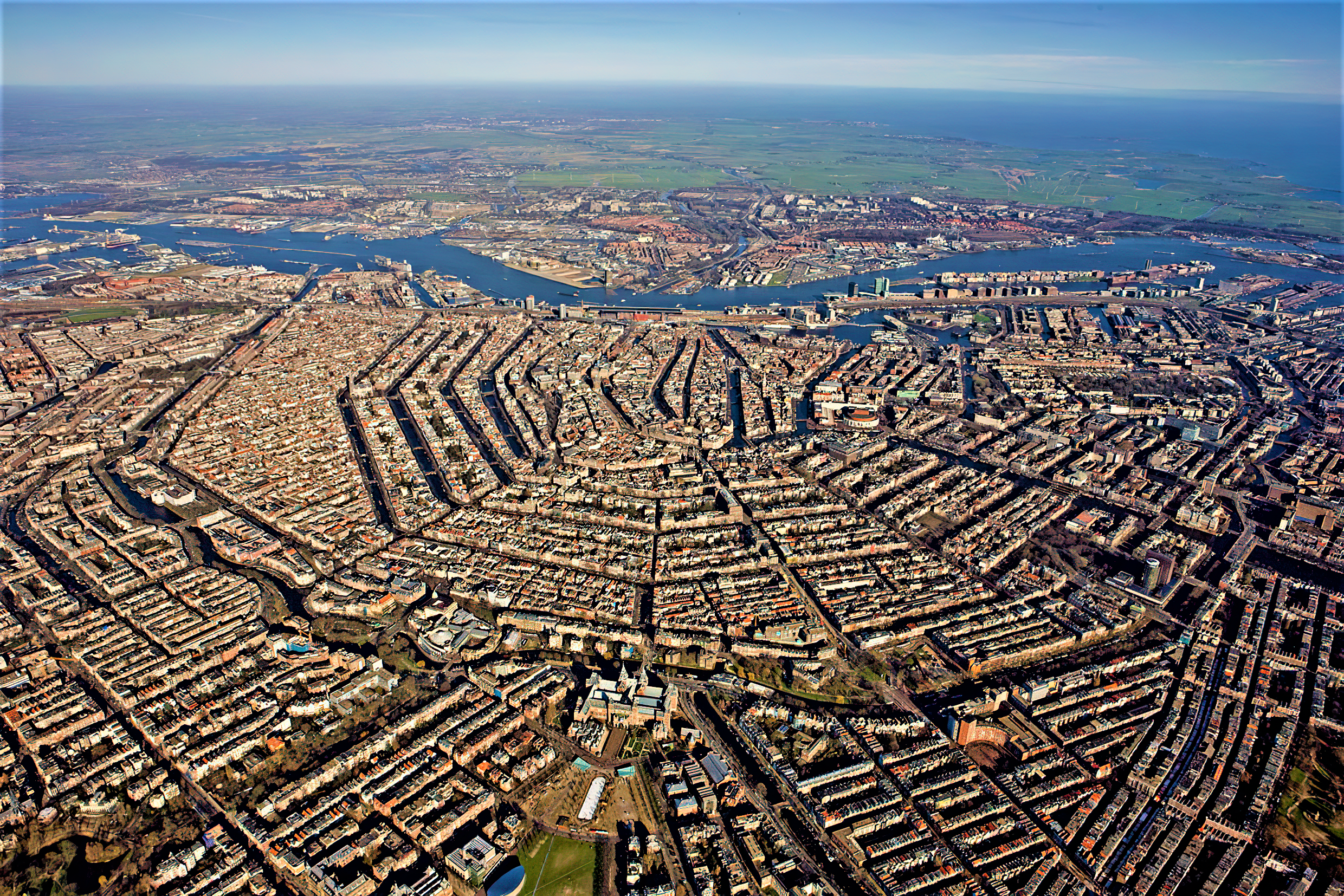
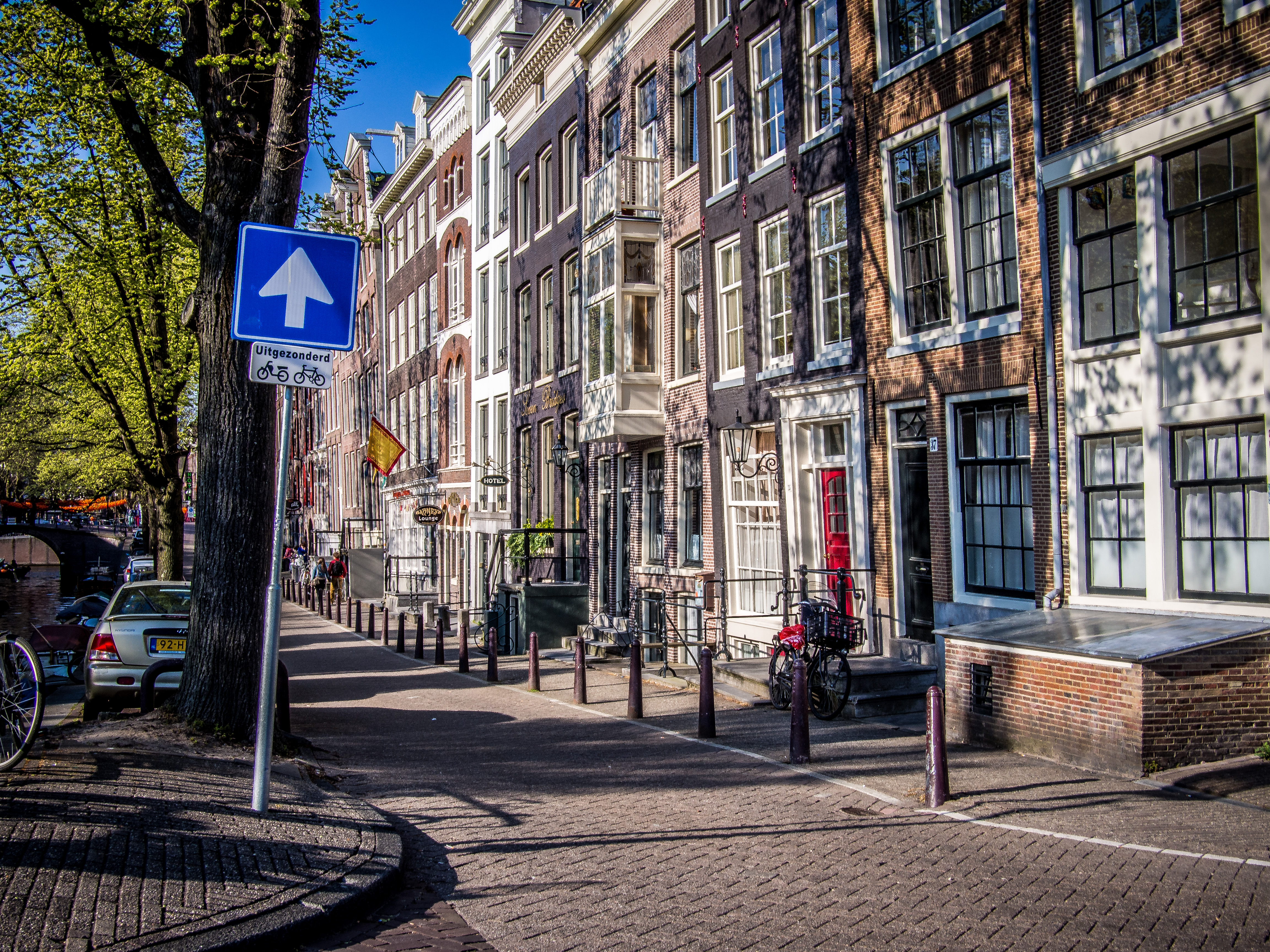
landmarkThe three main canals — Herengracht, Keizersgracht, and Prinsengracht — were dug in the 17th century as part of an extraordinarily well-planned city expansion, the Grachtengordel. Amsterdam had become one of the world's wealthiest cities through Dutch East India Company trade, and the city government decided in 1613 to enclose the old centre with concentric canals and build uniform merchant houses along them. 90 kilometres of canals, 1,500 bridges, 2,500 houseboats. The houses lean forward slightly — that's intentional, with hoisting beams at the top for moving furniture up by rope (staircases are extremely narrow). UNESCO World Heritage since 2010. The four inner canals' pattern is still visible from the air. Tour boats are cheesy but you genuinely see the city best from the water.
 04
04Van Gogh Museum
museumThe largest Van Gogh collection in the world — about 200 paintings, 500 drawings, and 750 letters, almost all still owned by the Van Gogh family until they donated to the state in 1962. Building by Gerrit Rietveld, opened 1973. Walks you chronologically from the dark Potato Eaters of 1885 through Paris, Arles (the Yellow House period), Saint-Rémy, and the final 70 days at Auvers-sur-Oise. Includes four of his Sunflowers versions (the Munich one and the London one are elsewhere) and Wheatfield with Crows. Timed tickets, book in advance. The Kurokawa wing from 1999 handles temporary exhibitions. Allow 2.5 hours.
 05
05Stedelijk Museum
museumThe modern and contemporary art museum on Museumplein. The 'bathtub' extension from 2012 — a huge white rounded form lifted off the ground — is divisive: Amsterdammers either love it or describe it as a fallen washing machine. The permanent collection is one of the best modern collections in Europe: major De Stijl (Mondrian, Rietveld's red-and-blue chair), Bauhaus, CoBrA (Karel Appel), Fluxus, plus post-war Dutch design. Mondrian's Composition in Red, Blue and Yellow is here. The museum's library is open to the public and has a strong design-history collection. Free to visit the café.
 06
06Vondelpark
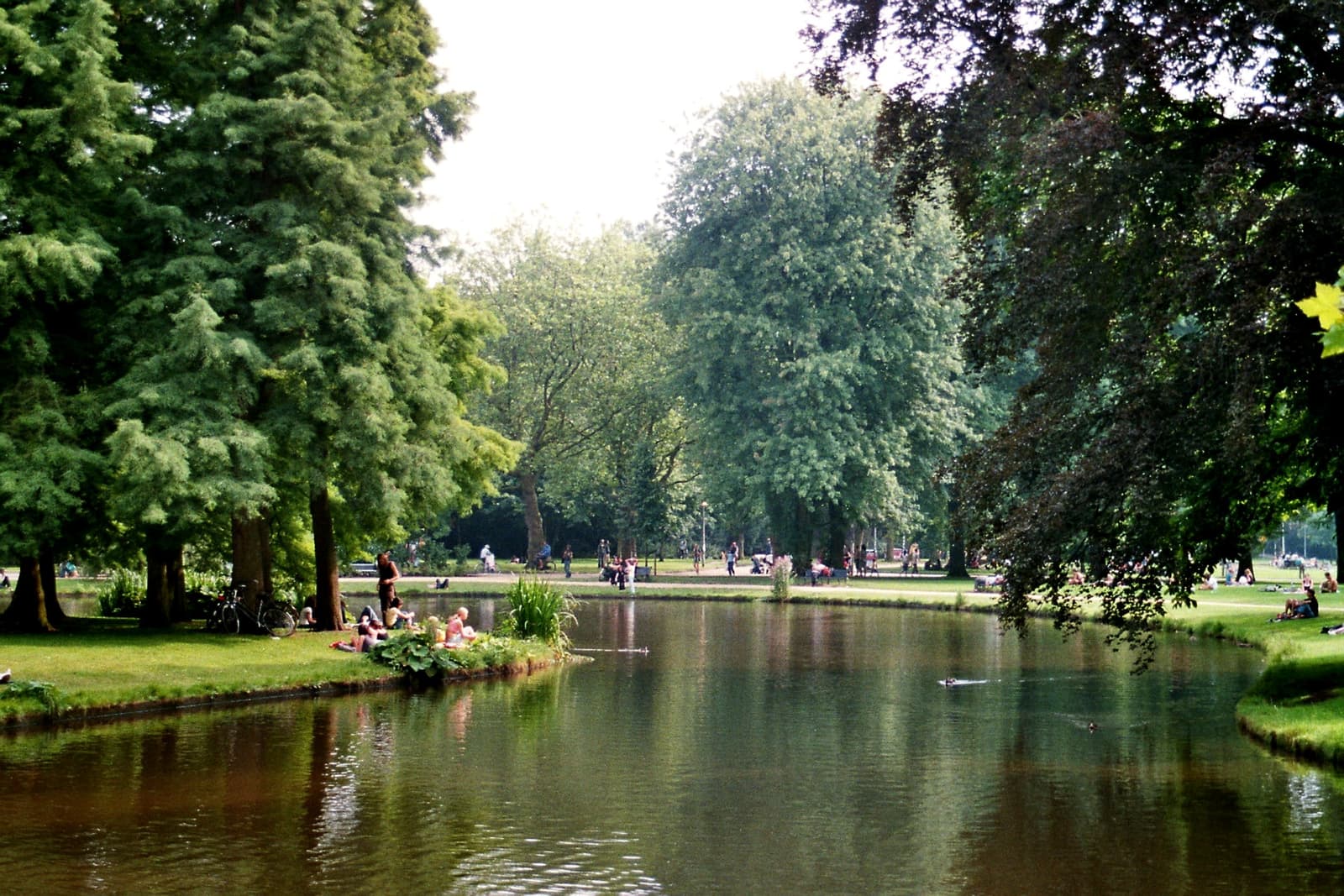
landmarkAmsterdam's main urban park, 47 hectares, opened 1865 on what was swampy land at the edge of the old city. Named after the 17th-century Dutch playwright Joost van den Vondel (a statue of him is about halfway along). Designed in English landscape style — winding paths, ponds, meadows, 120 species of tree. 10 million visitors a year, more than any other park in the Netherlands. Open-air concerts at the theatre in summer, loud Sunday roller-skate discos on the southern path, the Blauwe Theehuis café in the middle for a coffee. Connected to the Museumplein at the east end; the park makes a natural loop from there. Cyclists on one set of paths, pedestrians on another; don't mix them up.
What StreetLore sounds like in Amsterdam
Below: the brand voice, in the voice notes the app uses for Amsterdam.
“Blunt in the Dutch way: no sugarcoating, no false modesty, no fake enthusiasm. Dry humour. Happy to say something's overrated. Casual Dutch word with a gloss is fine: gezellig, borrel, fiets, grachten.”
Walking tours in other cities
Ready to walk Amsterdam?
StreetLore is a free download. Open it in Amsterdam and start walking — the lore lands as you pass each place.