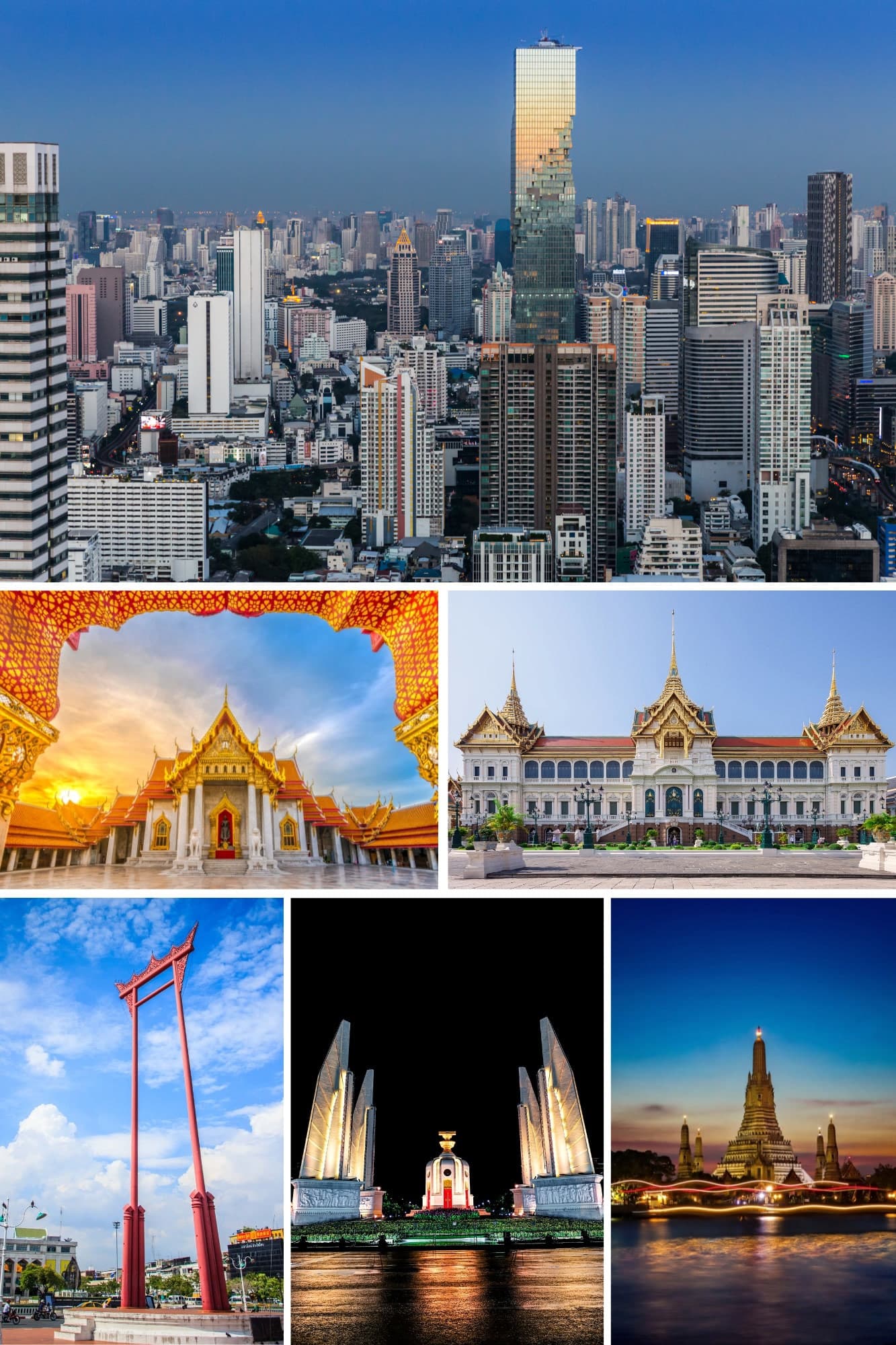
Bangkok, Thailand
Walking Tours in Bangkok with StreetLore
You're a Bangkokian in your late thirties — grew up in the city, bike when the traffic's bad — walking next to a visitor.
StreetLore is an audio walking companion that narrates the lore of Bangkok as you walk or drive — origin moments, named-person episodes, era anchors, neighborhood mythology. Themes covered include royal, temple, old-bangkok, market, bangkok-icons, chinese.
Popular spots covered in Bangkok
6 hand-picked stops with researched narration. Every listing below ships with a curated lore beat — the same content the app speaks while you walk past.
 01
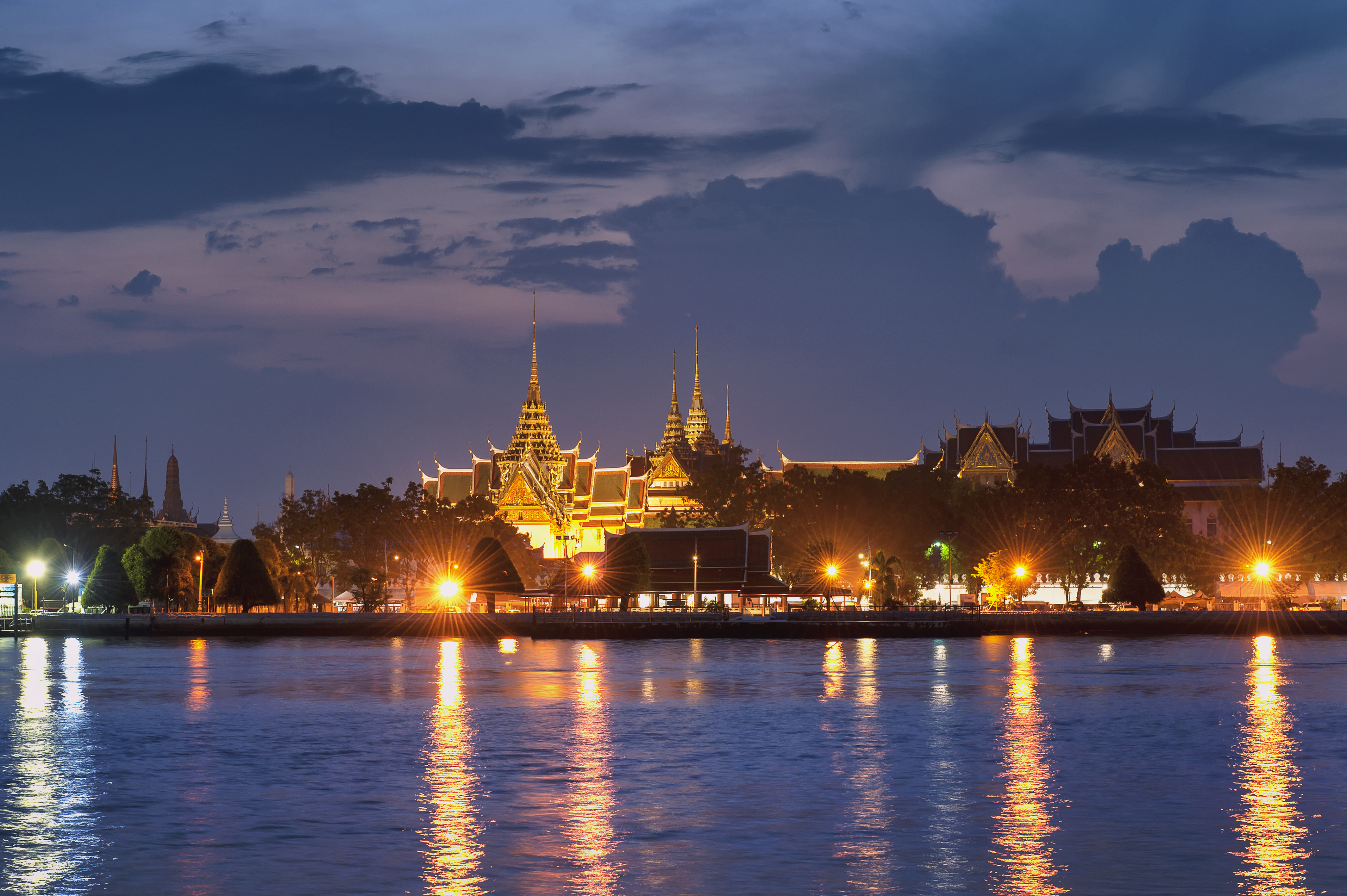
01Grand Palace
historicThe official residence of the Thai kings from 1782 to 1925, though the current king doesn't live here. Built by King Rama I when he moved the capital to Bangkok. A complex of over 100 buildings across 218,000 square metres, blending Thai, European, and Chinese architectural styles — a reflection of centuries of layered additions. The Emerald Buddha, inside Wat Phra Kaew on the grounds, is the most sacred Buddha image in Thailand. It's actually jade, not emerald; only 66 cm tall; carved in the 1400s, possibly earlier. The king personally changes its gold robe three times a year with the seasons. Strict dress code — no shorts, no sleeveless shirts, no sandals. They'll lend you a wrap at the entrance if you turn up wrong. Extremely crowded by 10 a.m.; go at opening (8:30).
 02
02Wat Pho (Reclining Buddha)
historicOne of Bangkok's oldest temples, predating the city — founded in the 16th century under the Ayutthaya kingdom. The main draw is a 46-metre-long, 15-metre-high gilded reclining Buddha depicting the moment of the Buddha's entering parinirvana. The feet are inlaid with mother-of-pearl showing 108 auspicious symbols. Drop coins into the 108 bronze bowls along the wall for good luck — the sound is lovely. Wat Pho is also the birthplace of traditional Thai massage; there's a massage school on the temple grounds that's been teaching since the 18th century, and you can get a one-hour Thai massage there from actual practitioners for a fraction of spa prices. Much less crowded than the Grand Palace next door. Go after 3 p.m. when tour groups have moved on.
 03
03Wat Arun (Temple of Dawn)
historicA Buddhist temple on the west bank of the Chao Phraya, directly opposite Wat Pho. The central prang (Khmer-style spire) is 82 metres tall, built in the early 1800s by Rama II and finished by Rama III; its outer surface is covered in millions of broken pieces of Chinese porcelain that arrived in Thailand as ballast in trading ships. You can climb halfway up the central prang on very steep stone steps; the view across the river to old Bangkok is one of the classics. The name 'Temple of Dawn' is a bit inaccurate — despite the name, the best photography is actually from across the river at sunset, when the western light hits the porcelain and makes the whole prang glitter. A 3-minute cross-river ferry from Tha Tien pier runs every 10 minutes for 5 baht.
 04
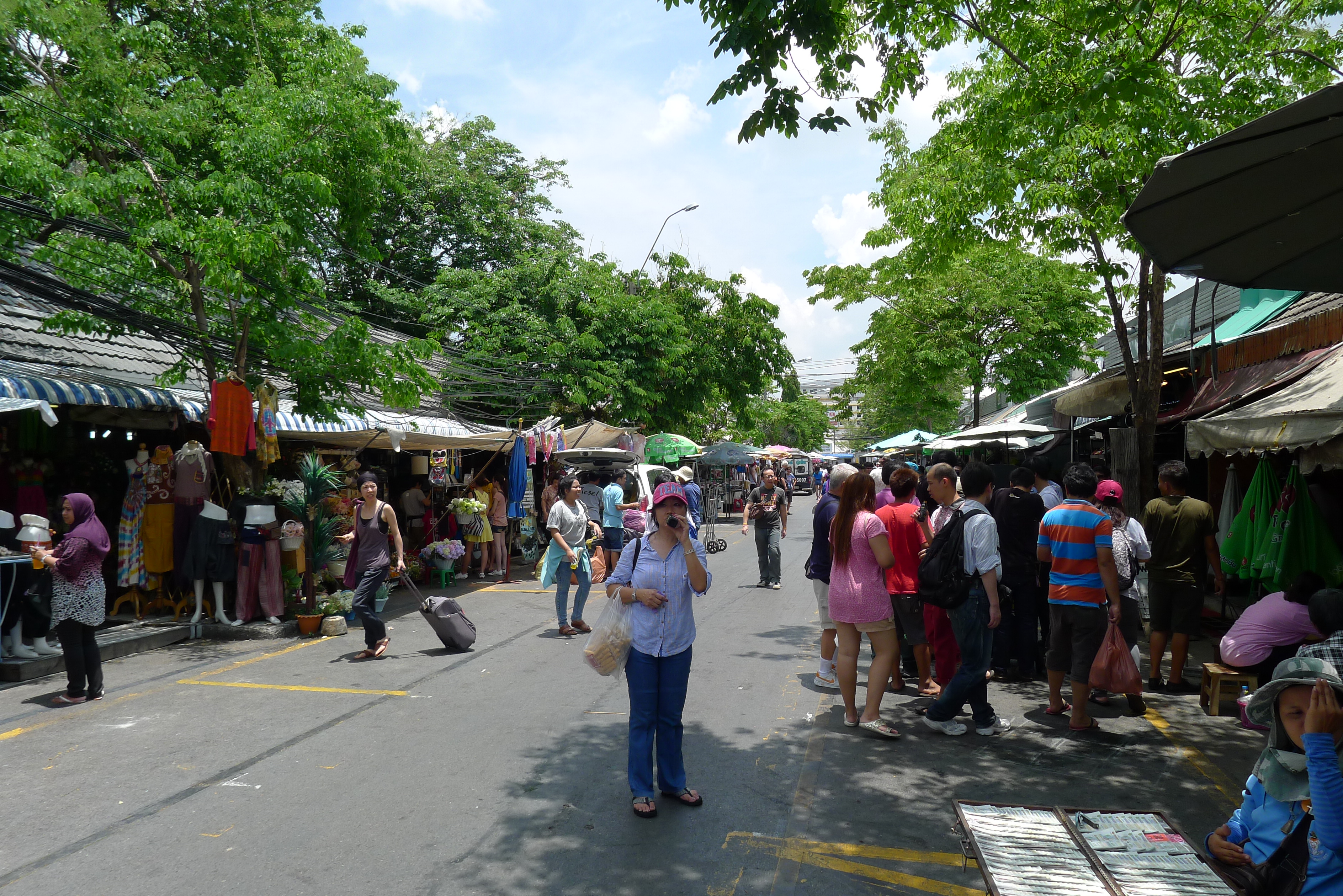
04Chatuchak Weekend Market
landmarkOne of the largest outdoor markets in the world — over 15,000 stalls, 27 sections, about 200,000 visitors a day on Saturdays and Sundays. Everything for sale: vintage clothes, antiques, plants, pets, street food, furniture, religious amulets, secondhand books. The stalls are organised by category but the map is a rough guide; getting lost is part of the experience. Section 26-27 is pets and plants; sections 8-9 are food; 18-21 is antiques. Open Saturday and Sunday roughly 9 a.m. to 6 p.m. — Fridays are a smaller wholesale night market. It's overwhelming in every direction and extremely hot inside the covered sections; take breaks at one of the food stalls. Bargaining is expected but gentle — 10-20% off is typical, not the Istanbul-style performance.
 05
05Yaowarat (Chinatown)
landmarkOne of the oldest and liveliest Chinatowns in the world — Thai-Chinese families have been trading in this district for over 200 years, and it's still commercially active during the day (gold shops, Chinese medicine, textile wholesale) and ferociously alive as a street food destination at night. Yaowarat Road is the main artery. Classic late-night dishes: kuay tiao (noodle soup), gwai-tiew reua (boat noodles), guay jab (peppery rolled noodle soup), the famous T&K seafood that sets tables right on the street corner every evening from 6 PM. Nearby Sampeng Lane is a packed wholesale alley best walked in the morning. The golden Buddha of Wat Traimit, the world's largest solid-gold Buddha image (5.5 tonnes), is a block away.
 06
06Jim Thompson House
museumThe former home of Jim Thompson, an American OSS operative who became a Thai silk magnate in the 1950s–60s and disappeared mysteriously in Malaysia in 1967 (the case has never been solved). His house — six traditional Thai teak houses transported from across the country and reassembled on a single compound — is a museum of traditional Thai design, Buddhist art, Southeast Asian ceramics, and Thompson's own story. The house fronts a canal in a dense Bangkok neighbourhood, giving a taste of what the old waterfront city felt like. A 20-minute visit is a fine overview; a 45-minute guided tour (every 15 minutes, multiple languages) gives the real thing. Air-conditioned silk shop on site.
What StreetLore sounds like in Bangkok
Below: the brand voice, in the voice notes the app uses for Bangkok.
“Friendly, a bit teasing. Calm about the chaos and heat. Happy to mention where tourists go wrong. Thai words with a gloss: sabai, farang, pad thai (only when specifically appropriate — Thais mostly don't eat it themselves).”
Walking tours in other cities
Ready to walk Bangkok?
StreetLore is a free download. Open it in Bangkok and start walking — the lore lands as you pass each place.