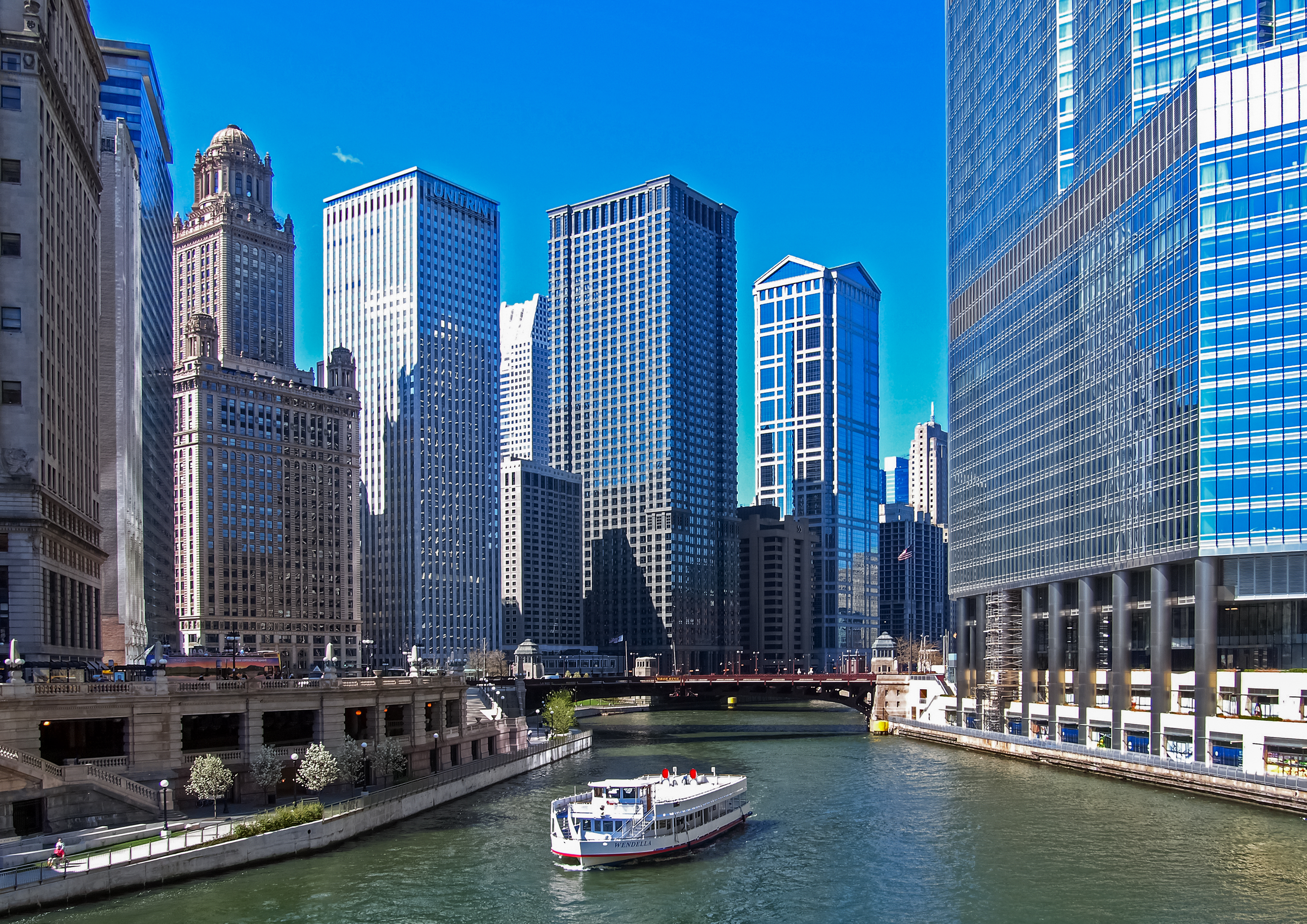
Chicago, Illinois, USA
Walking Tours in Chicago with StreetLore
You're a Chicagoan — grew up on the North Side or the South Side, still live in the city — walking next to a visitor.
StreetLore is an audio walking companion that narrates the lore of Chicago as you walk or drive — origin moments, named-person episodes, era anchors, neighborhood mythology. Themes covered include modern-art, millennium-park, skyscraper, loop, museum, grant-park.
Popular spots covered in Chicago
6 hand-picked stops with researched narration. Every listing below ships with a curated lore beat — the same content the app speaks while you walk past.
 01
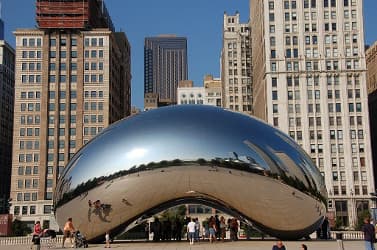
01Cloud Gate
artworkEveryone calls it the Bean. Its actual name is Cloud Gate, from Indian-British sculptor Anish Kapoor. Unveiled in 2004, finished in 2006. A hundred-ton stainless-steel blob assembled from 168 plates welded together and then polished down to an invisible seam — Kapoor insisted there be no visible weld marks, which took almost as long as the rest of the work. The twelve-foot arch underneath is called the omphalos. Kapoor reportedly disliked the 'Bean' nickname for years before giving up; even the city's signage now leans into it. The mirror surface turns Michigan Avenue into a curved panorama, which is the whole point: the sculpture reflects you and the skyline together.
 02
02Willis Tower
landmark1,450 feet tall (442 metres), 110 stories. Was the tallest building in the world from 1974 to 1998, and the tallest in the US until One World Trade topped it in 2013. Designed by Bruce Graham and Fazlur Khan at SOM; Khan's bundled-tube structural idea was an engineering revolution — nine square tubes bolted together, each rising to its own height, which is why the tower has its stepped silhouette. Locals still call it the Sears Tower. Sears sold the naming rights to the British insurance broker Willis Group in 2009, and Chicago hasn't really forgiven them. The glass Skydeck boxes on the 103rd floor stick four feet out from the building and have you standing on a transparent floor over the street.
 03
03Art Institute of Chicago
museumFounded 1879. The two bronze lions flanking the Michigan Avenue entrance were sculpted by Edward Kemeys in 1894 and have no names — the museum insists on this even though Chicagoans keep trying. In winning seasons the Bears, Blackhawks, Cubs, White Sox, or Bulls get helmet or cap decorations put on the lions. The permanent collection includes Hopper's Nighthawks (the 24-hour diner scene, 1942) and Grant Wood's American Gothic (the pitchfork farmer and daughter, 1930). Both paintings live a few rooms apart. The Modern Wing, added in 2009, is by Renzo Piano and has a narrow pedestrian bridge floating across Monroe Street to Millennium Park.
 04
04Millennium Park
parkOpened in 2004, four years late and three times over budget — but Chicago decided the result was worth it. The land was a working rail yard and parking lot for the Illinois Central until then. Mayor Daley pushed it through as a millennium gift to the city. Inside the park: Anish Kapoor's Cloud Gate (the Bean), Jaume Plensa's Crown Fountain (the two glass towers that project Chicagoans' faces and spit water at kids), and the Frank Gehry-designed Pritzker Pavilion — the bandshell with the silver ribbons and the trellis of speakers overhead, which carries unamplified orchestra sound clean across the lawn. The free Grant Park Music Festival plays there all summer. The Lurie Garden tucked at the south end is a serious bit of native-prairie planting that's a quiet break from the crowds at the Bean.
 05
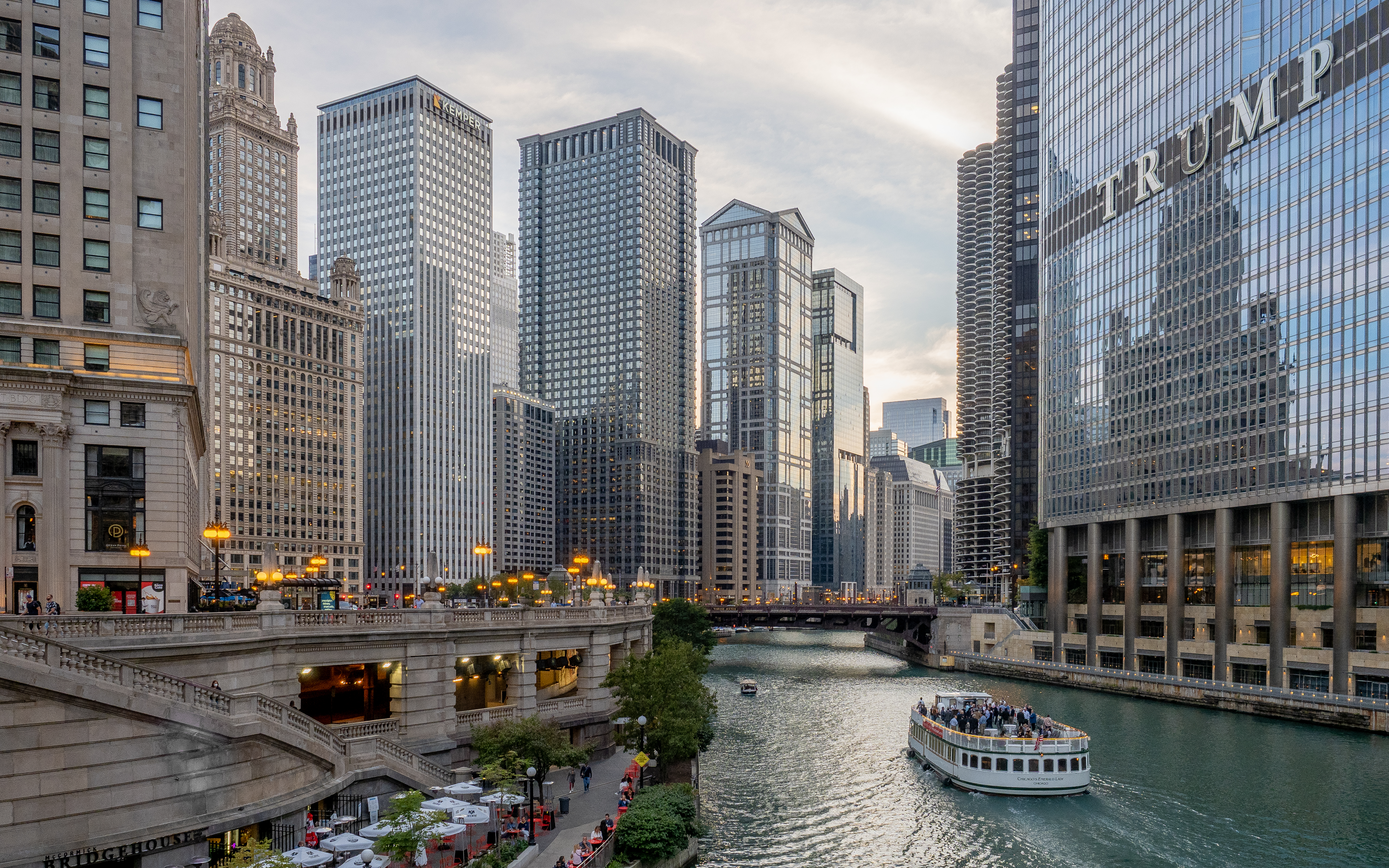
05Chicago Riverwalk
landmarkThe river you're looking at runs backwards. It used to flow into Lake Michigan and carry the city's sewage with it — which was also Chicago's drinking water supply. Cholera and typhoid epidemics were so bad the city decided to reverse the entire river. Completed in 1900 using the Chicago Sanitary and Ship Canal, it's still one of the largest civil engineering feats in American history. The American Society of Civil Engineers called it a 'Civil Engineering Monument of the Millennium'. The river now flows south-west, eventually into the Mississippi. Every March it gets dyed bright green for St. Patrick's Day — the Chicago Journeymen Plumbers figured out the formula in 1962. The formula is still secret.
 06
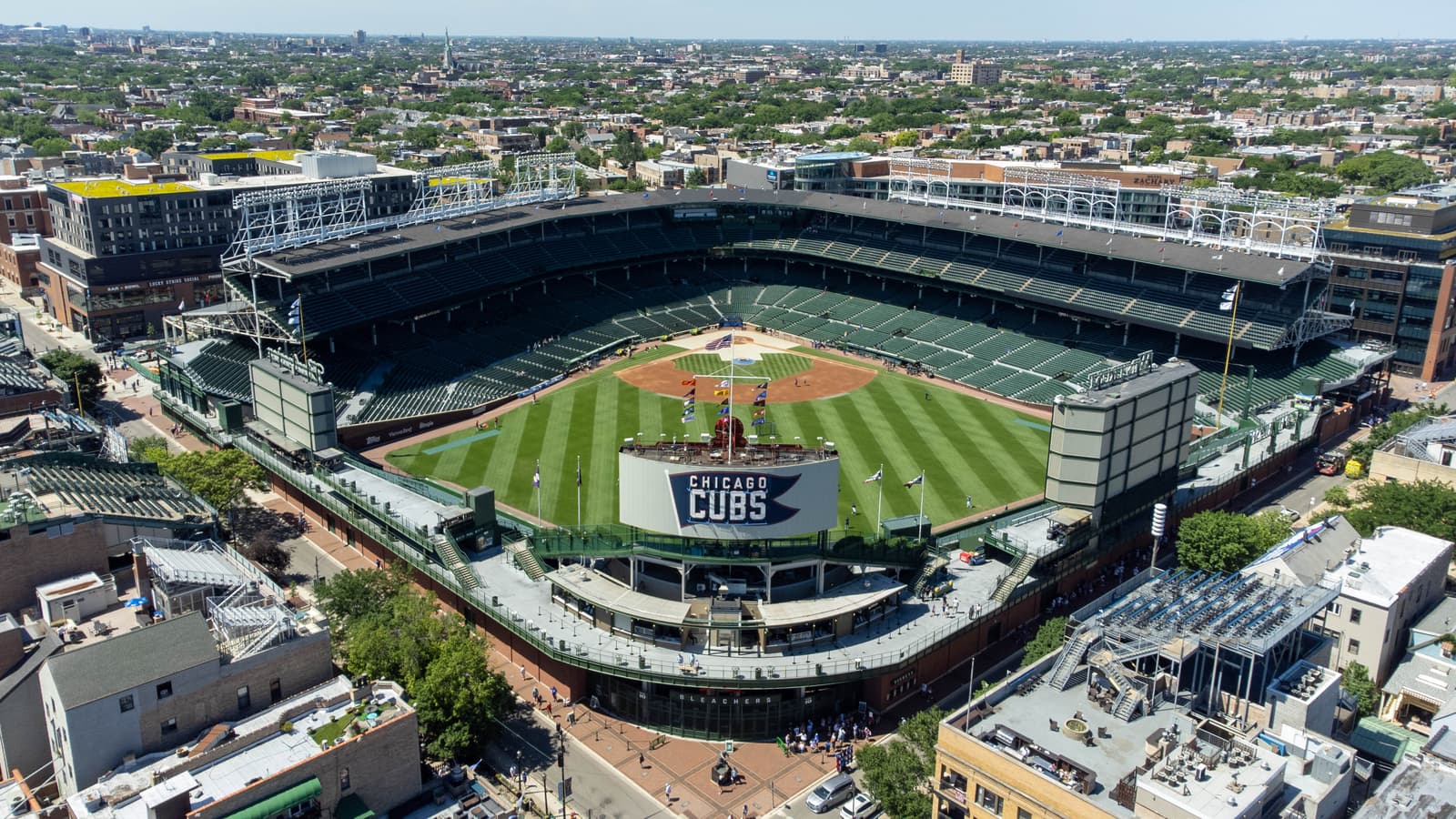
06Wrigley Field
landmarkOpened 1914 as Weeghman Park for the Chicago Whales of the Federal League. Renamed Wrigley Field in 1927 after Cubs owner William Wrigley Jr. The ivy on the outfield walls was planted in 1937 by future Cubs owner Bill Veeck. The hand-operated scoreboard above center field still runs the way it did in 1937 — three guys inside swap numbered panels. Lights weren't installed until 1988, the last major-league park to get them — the Cubs played day games only for 74 years. The famous 'curse of the Billy Goat' was supposedly placed in 1945 by a bar owner whose pet goat was kicked out of the World Series; the Cubs didn't win another championship until 2016, breaking a 108-year drought. The neighborhood (Wrigleyville) basically exists because of the park.
What StreetLore sounds like in Chicago
Below: the brand voice, in the voice notes the app uses for Chicago.
“Direct. A little dry. Midwestern in the best sense: friendly without performing it. Real pride in the city, but also willing to roast it — the weather, the politics, the sports heartbreak. No 'windy city' tourist talk; locals don't use that phrase.”
Walking tours in other cities
Ready to walk Chicago?
StreetLore is a free download. Open it in Chicago and start walking — the lore lands as you pass each place.