Rome, Italy
Walking Tours in Rome with StreetLore
You're a Roman — born here, live here, eat here — walking next to a visitor.
StreetLore is an audio walking companion that narrates the lore of Rome as you walk or drive — origin moments, named-person episodes, era anchors, neighborhood mythology. Themes covered include ancient-rome, imperial, engineering, papal, renaissance, baroque.
Popular spots covered in Rome
6 hand-picked stops with researched narration. Every listing below ships with a curated lore beat — the same content the app speaks while you walk past.
 01
01The Colosseum
historicOfficially the Flavian Amphitheatre — 'Colosseum' comes from a giant bronze statue of Nero that used to stand next to it, a Colossus (melted down in the Middle Ages). Inaugurated in 80 CE by the Emperor Titus with a hundred days of games. Held 50,000 to 80,000 spectators. What you see today is about two-thirds of the original — the south side collapsed in the 1349 earthquake and the travertine stone was carted off to build St Peter's, the Palazzo Venezia, and half the churches in Rome. Look down into the arena floor: what's visible is the hypogeum, the underground network of corridors where gladiators and animals were kept in cells and brought up on wooden lifts. The arena floor itself was wooden, covered with sand (arena is just the Latin word for sand).
 02
02The Pantheon
historicBuilt under the Emperor Hadrian around 126 CE on the site of an earlier temple. Still the largest unreinforced concrete dome in the world — 43.3 metres across, exactly equal to its height, so a perfect sphere fits inside. The Romans used a concrete mix that got lighter as it went up (pumice and tuff at the top, basalt at the base); we've only recently figured out why Roman concrete lasts so long — it's partly because of 'hot mixing' with lime that self-heals cracks. The oculus in the ceiling — the round hole, 9 metres across — is the only light source. Rain does come in, and there are drains in the floor. The Pantheon survived because it was converted to a church in 609 CE; most pagan temples didn't get that lucky. Raphael is buried inside, along with two Italian kings.
 03
03Roman Forum
historicThe civic centre of ancient Rome for nearly 1,000 years — law courts, markets, triumphal processions, temples, the rostra where Marc Antony spoke at Caesar's funeral, the spot where Caesar was actually cremated (a low altar in the Temple of the Divine Julius, often with fresh flowers left by Romans who still care). The arches of Titus (81 CE) and Septimius Severus (203 CE) bookend the paved Via Sacra. Most of the buildings are rubble; you have to reconstruct them mentally. An audio guide or a good book is essential; without one you're walking through a pile of marble. Combined ticket with the Colosseum and Palatine Hill is how everyone sees it; budget a full morning.
 04
04Vatican Museums / Sistine Chapel
museumThe papal collection, accumulated over 500 years, in 54 galleries covering 7km of hallways. You queue, you walk, you probably can't stop walking — 25,000 visitors a day move through in a slow shuffle toward the Sistine Chapel at the end. Raphael Rooms, the Gallery of Maps, Etruscan antiquities, the Belvedere Torso that Michelangelo studied. The Sistine Chapel: Michelangelo's ceiling (1508–12), including the Creation of Adam, and the Last Judgment on the altar wall (1536–41); painted on wet plaster in fresco, restored in the 1980s back to colours most of the world hadn't seen for 400 years. Photography banned in the Chapel (loudly enforced by the guards). Book timed tickets online or you'll lose 2 hours to the queue.
 05
05St Peter's Basilica
historicThe largest church in Christendom, built 1506–1626 on what was believed to be the burial site of St Peter (excavations in the 20th century found a 1st-century tomb where tradition placed it). The dome is Michelangelo's, finished after his death by Giacomo della Porta. Inside, Bernini's twisted bronze baldachin over the main altar is 29 metres tall and uses bronze stripped from the Pantheon's portico. Michelangelo's Pietà (1499, sculpted when he was 24) is in the first chapel on the right, behind bulletproof glass since 1972 when a man attacked it with a hammer. The square outside, also Bernini (1656–67), holds 300,000 for Papal audiences. Climbing the dome costs a few euros; the view is excellent. Enter the basilica free, but security queue is always long.
 06
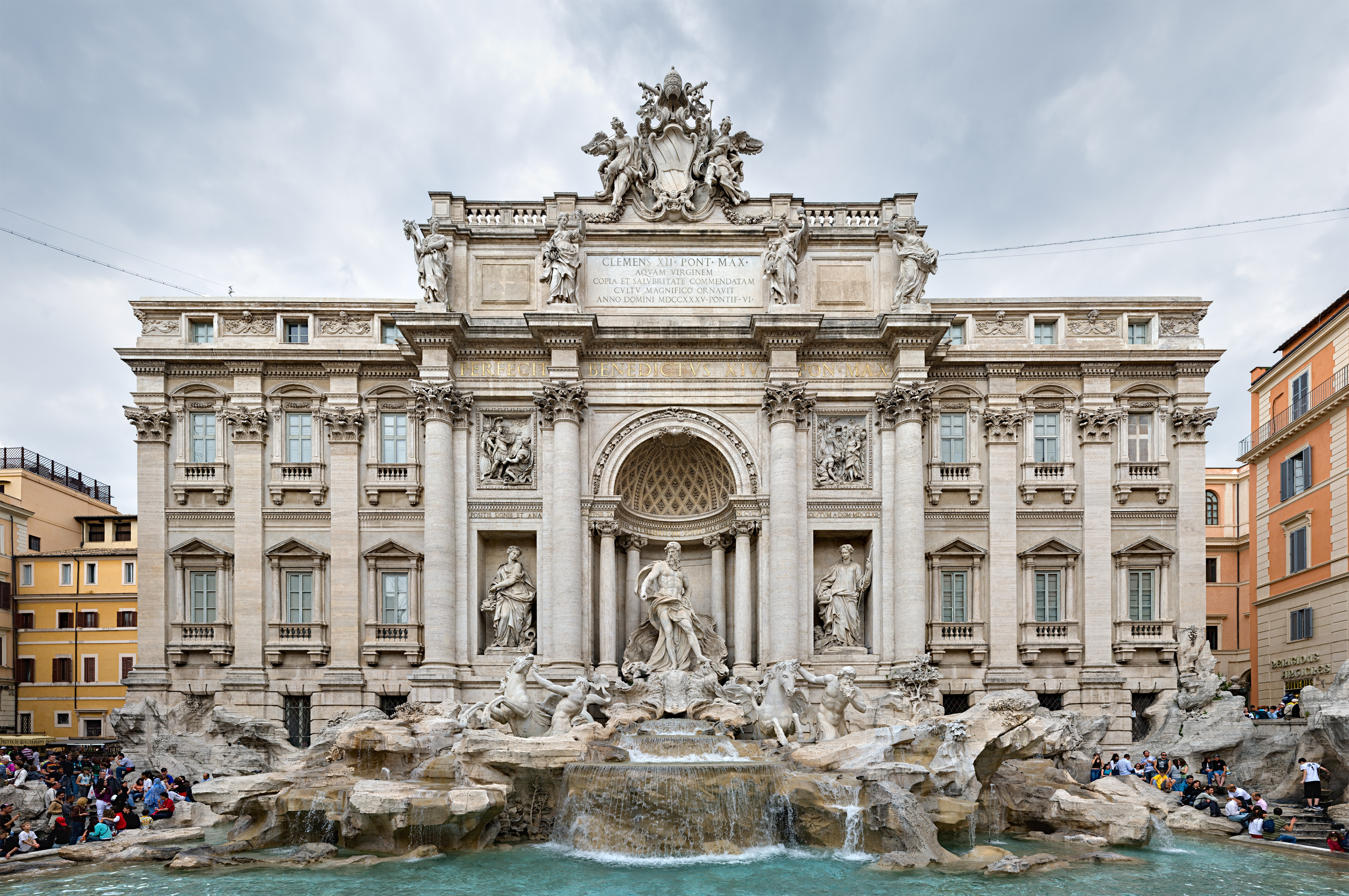
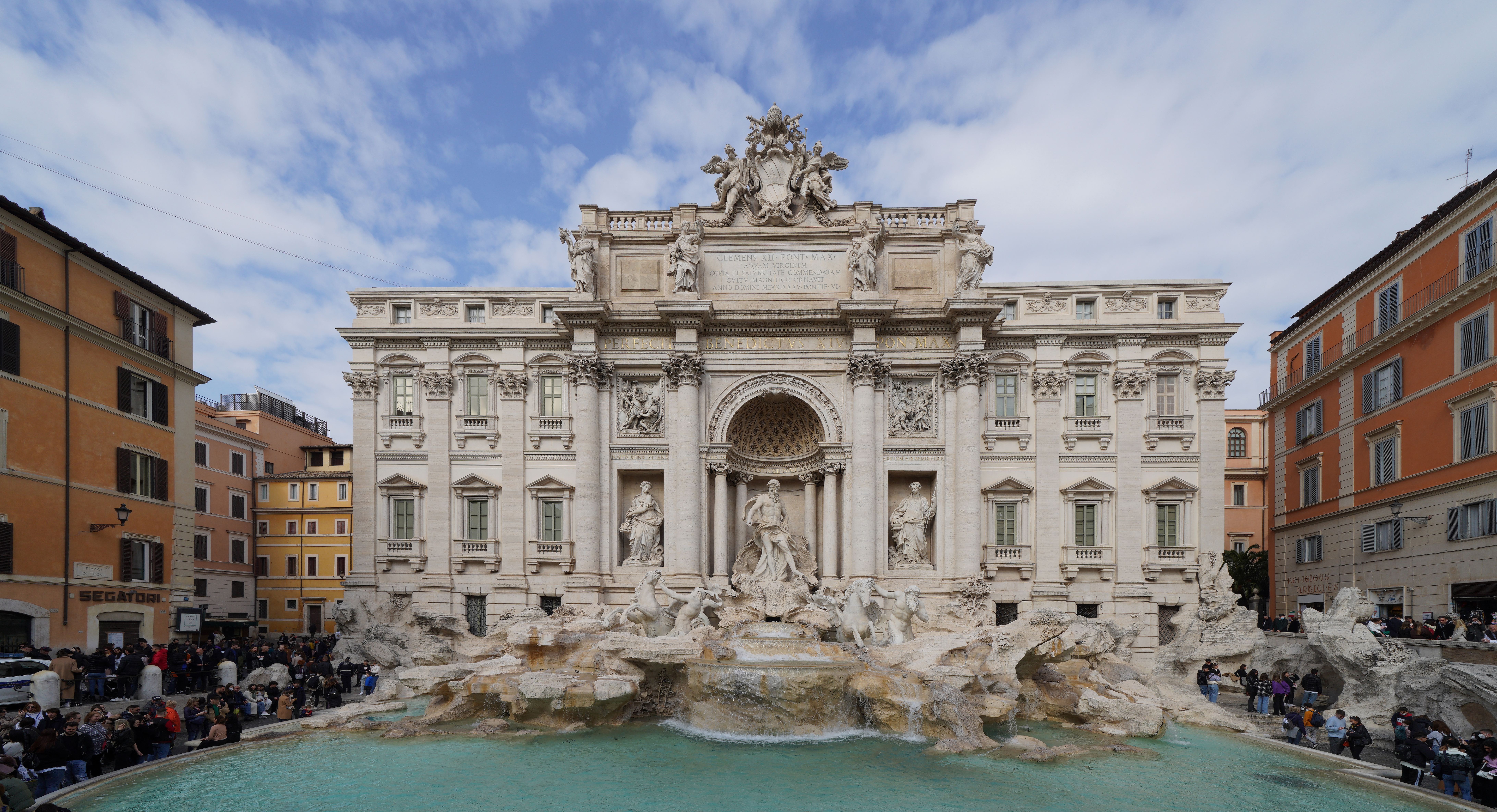
06Trevi Fountain
landmarkA Baroque fountain finished in 1762, at the end point of the Aqua Virgo — a Roman aqueduct built in 19 BCE that still supplies the fountain with water over 2,000 years later. The central figure is Oceanus. The coin-tossing tradition: one coin over your left shoulder with your right hand means you'll return to Rome, two coins means love, three means marriage. About 3,000 euros a day get tossed in and are collected weekly by the city and donated to a Catholic charity that feeds the poor. Trying to scoop coins out is illegal. The square is usually packed — if you want to actually see the fountain, come at 6 a.m. The fountain was featured in La Dolce Vita (Fellini, 1960), which made it famous internationally; bathing in it is now strictly banned, mostly because of that scene.
What StreetLore sounds like in Rome
Below: the brand voice, in the voice notes the app uses for Rome.
“Affectionate, a bit dramatic in the Roman way, candid about how chaotic and layered and occasionally broken the city is. Willing to roast both the Vatican and the traffic. Italian word with a gloss is welcome — aperitivo, passeggiata, menefreghismo.”
Ready to walk Rome?
StreetLore is a free download. Open it in Rome and start walking — the lore lands as you pass each place.