Dubai, United Arab Emirates
Walking Tours in Dubai with StreetLore
You're a long-term Dubai resident — could be Emirati, could be one of the 85% who are expats — walking next to a visitor.
StreetLore is an audio walking companion that narrates the lore of Dubai as you walk or drive — origin moments, named-person episodes, era anchors, neighborhood mythology. Themes covered include skyscraper, downtown-dubai, retail, hotel, jumeirah, old-dubai.
Popular spots covered in Dubai
6 hand-picked stops with researched narration. Every listing below ships with a curated lore beat — the same content the app speaks while you walk past.
 01
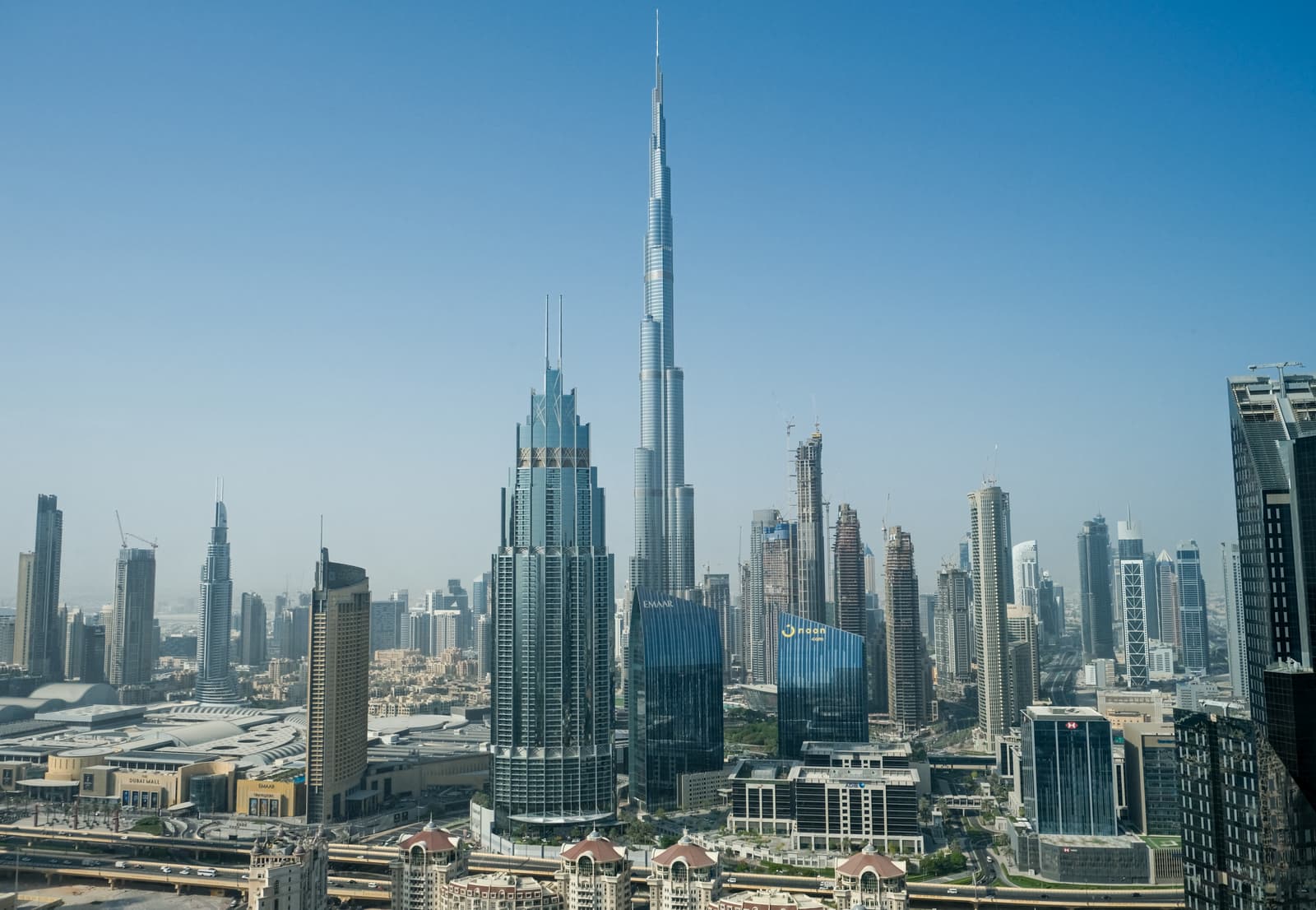
01Burj Khalifa
landmarkThe tallest building in the world since its completion in 2010 — 828 metres, 163 floors. Designed by Adrian Smith at SOM (the same firm behind Willis Tower in Chicago). The footprint is a Y-shape based on a desert flower, the Hymenocallis, which also acts as a wind-deflecting aerodynamic feature. The foundation goes 50 metres down into bedrock and is supported by 192 piles. The central tower is a buttressed-core structure that steps in as it rises — 27 setbacks reduce wind loading at higher floors. The building has its own microclimate: temperature at the top can be 15°C cooler than the base. The observation deck on floor 148 is at 555 metres. Fun fact: it was supposed to be called Burj Dubai but was renamed after Sheikh Khalifa of Abu Dhabi, who bailed Dubai out financially during the 2009 debt crisis.
 02
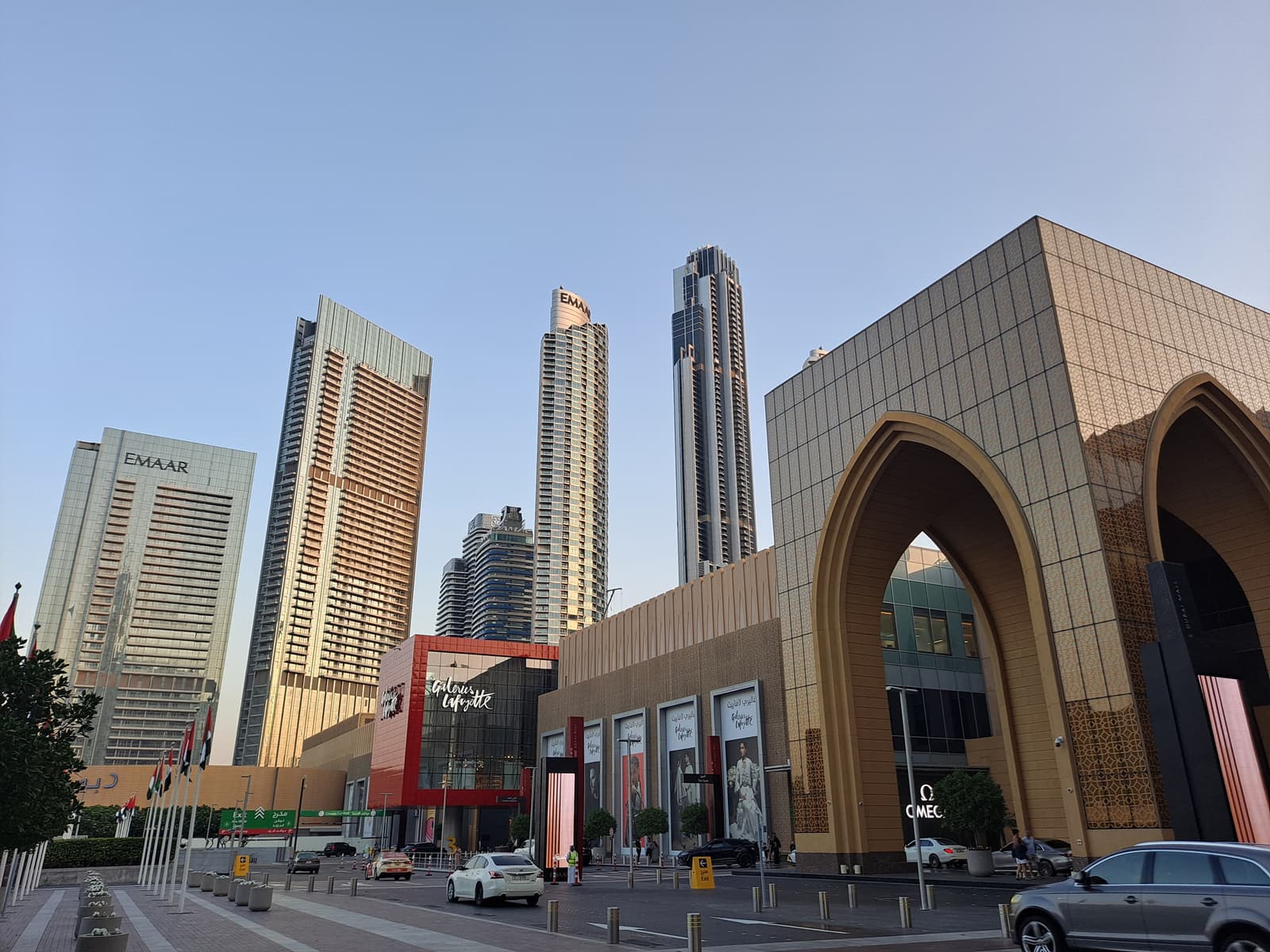
02The Dubai Mall
landmarkOne of the largest shopping malls in the world by total area — 1,200+ shops, 200 dining options, an Olympic-sized ice rink, a 1,200-seat theatre, an aquarium, a VR park, and a 30-metre waterfall. Over 100 million visitors a year. Built by Emaar (who also built the Burj Khalifa). The aquarium has a viewing panel that held the Guinness record for the largest acrylic panel until a Chinese mall took it. The fountain outside the mall, at the base of the Burj Khalifa, does shows every 30 minutes in the evening — 275 metres long, water jets reaching 150 metres high, synchronised to music from Arabic pop to Whitney Houston. It's free and worth catching once. The mall is essentially the city's living room — locals walk laps for exercise in summer when it's too hot outside.
 03
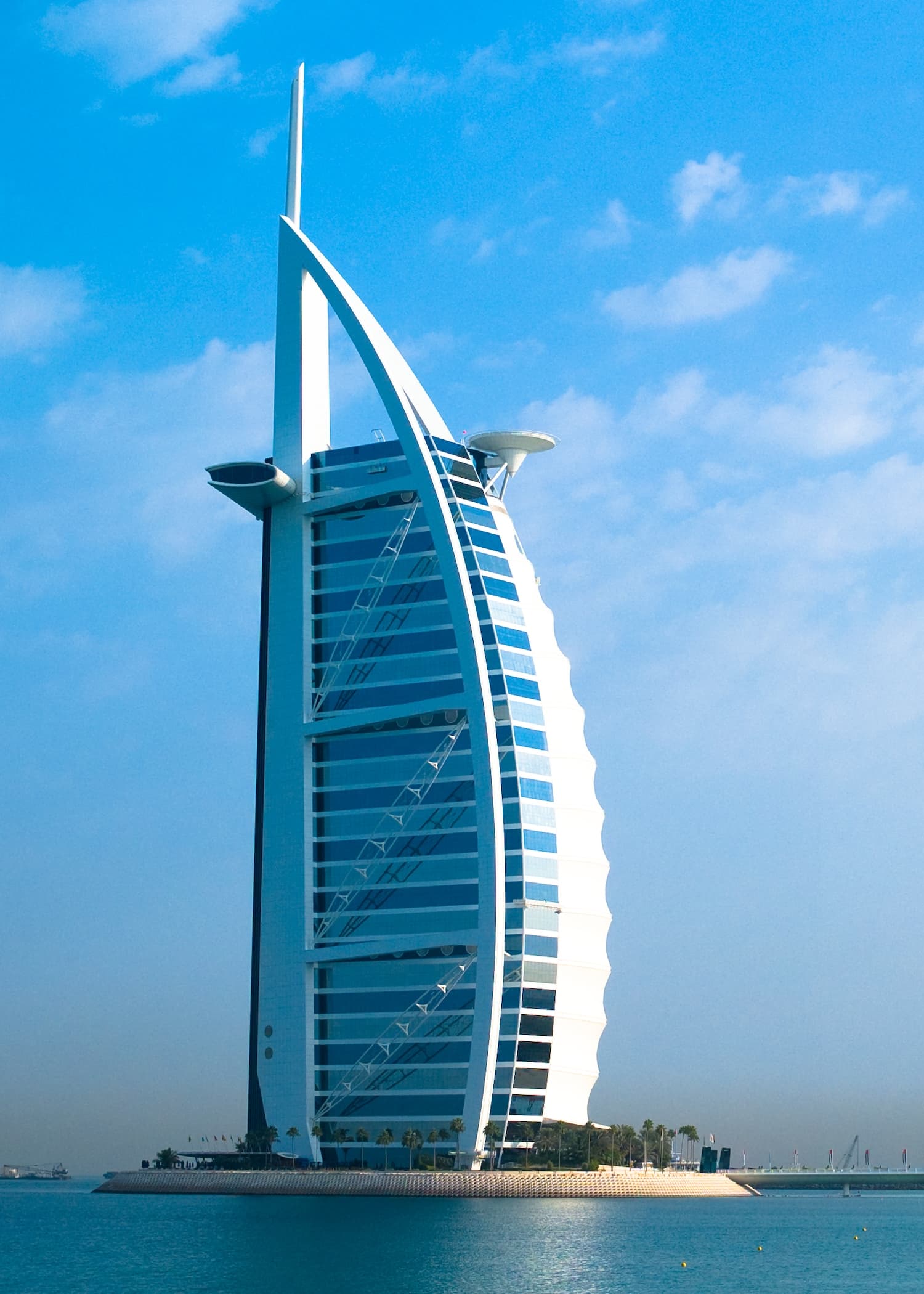
03Burj Al Arab
landmarkThe sail-shaped hotel on its own artificial island 280 metres off Jumeirah beach, opened 1999. 321 metres tall, designed by Tom Wright of WKK Architects. Marketed as 'the world's only seven-star hotel', a category the hotel industry doesn't formally use — the designation is a marketing invention that stuck. The interior is famously ornate: a 180-metre atrium, walls of gold leaf, water features in the lobby. Non-guests can't enter the hotel lobby without a restaurant reservation or spa booking. The exterior is the icon — the curving white Teflon-coated fibreglass façade was originally computer-designed to be structurally optimal but is unmistakably a sail shape. Worth a photograph from Kite Beach to the south or the public beach at Umm Suqeim just in front.
 04
04Gold Souk (Deira)
landmarkThe old Gold Souk in Deira is what Dubai looked like before the modern city — narrow covered alleys, hundreds of small shops, glass cases piled with gold jewellery. Over 300 retailers. The gold price is set by the global market and posted daily at the entrance; prices per gram are non-negotiable for the gold itself, but the making charge (craftsmanship) is where haggling happens. Tens of tonnes of gold move through here a year, and Dubai's position as a gold trading hub is part of why the city became rich before oil. Best time to visit is in the evening, around 8 p.m., when the heat's down and the lights come on. Next door is the Spice Souk — saffron, frankincense, dried lemons, za'atar — worth a separate hour.
 05
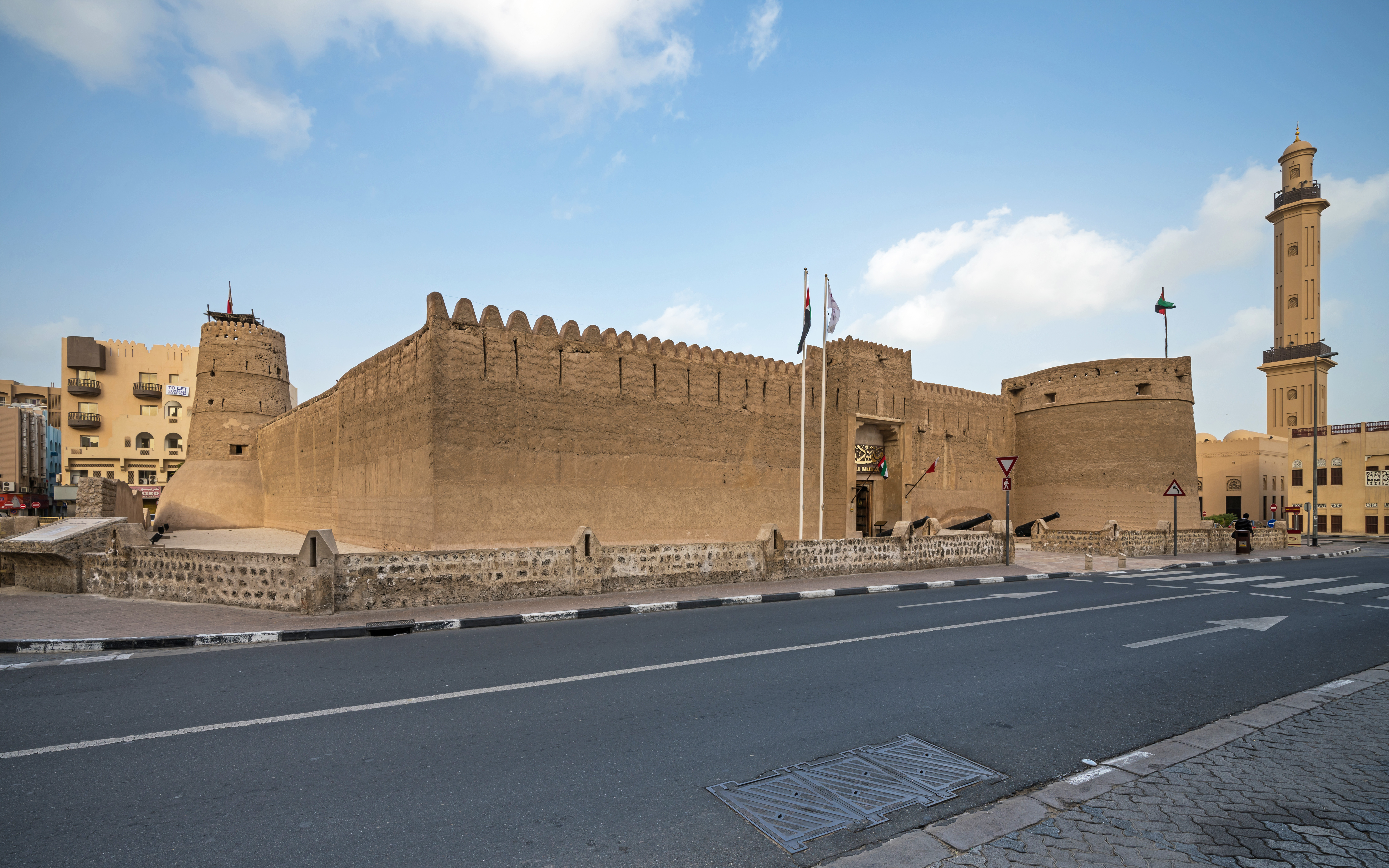
05Dubai Museum / Al Fahidi Fort
historicThe oldest standing building in Dubai — Al Fahidi Fort, built around 1787 from coral stone and palm-frond roofing, which used to be the emir's residence and Dubai's only defence against raiding tribes. Now houses the Dubai Museum: small, well-curated, free. Shows Dubai before oil: pearl-diving equipment (divers would hold their breath for up to two minutes, weighted down by stones), dhow-building tools, scenes of Bedouin life. The museum is built down into the ground — you walk along underground reconstructed alleyways of an old souk. Closed for renovation through 2024–25; check before visiting.
- 06
Al Fahidi Historical Neighbourhood
historicThe best-preserved old Dubai neighbourhood — two blocks of narrow coral-and-gypsum alleyways, restored windtower houses (barjeel — pre-AC passive cooling chimneys that funnel breeze down into rooms), and small courtyards. Built in the late 1800s for Persian merchants from the town of Bastak, who had moved across the gulf to Dubai for its tax advantages. Now a cultural zone with the Sheikh Mohammed Centre for Cultural Understanding (runs cultural meals and Q&A sessions about Emirati life), the XVA Art Hotel, several small museums, and the Coffee Museum. A short walk from the Dubai Creek abra station. The only part of Dubai that looks like it could be any age — most of the rest of the city is visibly post-1995.
What StreetLore sounds like in Dubai
Below: the brand voice, in the voice notes the app uses for Dubai.
“Pragmatic and a little ironic. Willing to acknowledge the spectacle and also that the city is only 50 years old. Matter-of-fact about the heat, the cost, the construction. Some Arabic mixed in is fine: souk, abra, mashallah.”
Ready to walk Dubai?
StreetLore is a free download. Open it in Dubai and start walking — the lore lands as you pass each place.